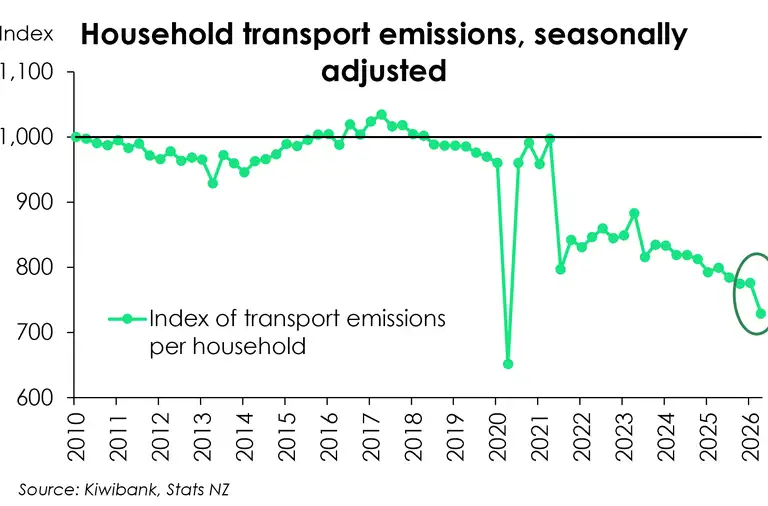

- Prices increased in the September quarter, up 3.7%, which is uncomfortable. Mostly driven by the petrol prices, but that doesn’t exactly take the pressure of the Reserve Bank to hike interest rates this week.
- The central banks of other major countries around the world are also making interest rate decisions this week (Canada, Japan, the US, and the EU). All will be feeling the heat from sky-high oil prices.
- Despite volatility, US equity markets have had a solid year. All three major US stock indexes are up strongly compared to the start of the year.
We had a pleasant surprise from last week’s inflation data. Prices grew, but at a slower rate than we were expecting for the September quarter. Headline inflation was 3.7% (down from 4.1%). However, with petrol prices rising alarmingly high in the last month, this doesn’t bode well for the end of the year.
The silver lining is that a lot of these price movements in the September quarter were coming from offshore. Imported inflation was 4.3%. Domestic prices were up 3.3%, still above where the Reserve Bank will be comfortable, but not accelerating. And when we strip out transport related prices from the headline, we get a 2.7% inflation rate. Much more reasonable and, importantly, within the RBNZ’s target band of 1-3%. Read more about our take on the inflation data here.
Worries about the future however will be top of mind at this week’s Reserve Bank meeting. We expect there will be a move up in the official cash rate, from 2.75% to 3%. We don’t think it’s necessary, not yet. Our domestic consumption is subdued. Prices are rising for essentials like petrol, but demand for discretionary stuff like eating out and buying new shoes is down.
Our central bank is not alone in its difficult decision: fight offshore inflation with interest rate hikes, and risk stalling the economy in the process; or leave the interest rate where it is and wait the crisis out… The Bank of Canada, European Central Bank, Bank of Japan and the Federal Reserve (US) all have to come to a decision this week. At this stage, all are expected to hold their own interest rates steady.
But many will be eyeing the US the most. US interest rates have an impact on currencies around the world, ours included. We can expect some volatility this week as currencies adjust to new rate differentials between countries.
We also have a focus on major tech firms this week. A sell-off in AI and tech-related stock moved index funds down, especially the tech-heavy Nasdaq, down 0.97% on the week. The Dow Jones and S&P 500 also took hits down, but not enough to take the indices below August highs. The saving grace for equities was Anthropic filing for an IPO. The Nasdaq is still 12.6% up from January of this year, The S&P 500 not far behind on 12.1% and the Dow Jones up 8.9%. So all in all, it’s still looking like 2026 is a good year for index funds. Nonetheless, earnings releases from major tech firms will be closely watched, given recent selling pressure across technology stocks and concerns over AI-related valuations.
Another market moving data point out this week will come from our neighbours across the Tasman. Aussie inflation data (both monthly and quarterly) will be released and is likely to move interest rate markets. The market is pricing in a 50/50 chance of a Reserve Bank of Australia interest rate move at their 3 November meeting and an 80% chance of a move at their December meeting. A hotter than expected inflation print would see the market quickly flip those odds around.
This will affect the Kiwi/Aussie dollar exchange rate. Higher Australian rates will mean more Aussie dollar strength, clipping the Kiwi dollar’s wings further. Bad news if you’re planning an Aussie holiday for the summer, good news if you’re an exporter with an Aussie buyer.
Financial Markets
The comments below were provided by Kiwibank traders. Trader comments may not reflect the view of the research team.
In Markets – Decision time for the RBNZ
An eventful week saw a variety of both international and domestic drivers of local rates. These included central-banker speak, data, ongoing Mid East tensions, oil, debt concerns in some of Europe’s largest economies, and further jitters in stocks and particularly AI with some heavy-weight hedge fund players also making their thoughts known on this. The end result locally was a lower and flatter rates curve with the shorter end of the swaps curve influenced by the implied path while the long-end took direction from offshore moves. For our week, year-end OCR lifted to around 3.16% (+2bps) with year-ahead OCR at around 3.85%, 2year IRS was 4.05% (-2bps) and 10-year IRS was marked at 4.62% (-7bps).
First-up and closer to home we did have some RBA speakers early in the week with Assistant Governor Kent talking to rising neutral rates and in inclination of firms to pass on costs, although tempered with comments around inflation expectations remaining well anchored and household consumption showing signs of weakening, however the real move occurred with Deputy Governor Andrew Hauser comments on the Wednesday. Hauser, deputy chair of the RBA’s Monetary Policy Board and noted previously for some firm commentary, continued with that theme at an investor conference, where he stated that the inflation outlook appeared worse and expected Q3 CPI to print higher than in their August forecast, capacity pressures were likely higher, productivity needs to lift, and that they were assessing recent jobs data for noise due to revisions. He did note some signs of slowing in the economy and labour markets, however bond futures traded lower and RBA November priced probability doubled to over 50%, while the priced peak lifted back through one more full 25-point tightening, with some perhaps paring back the data-dependency assumptions around their RBA view.
Further afield, equity market and AI related jitters alongside European concerns continued to see a bid applied to US rates. The AI story was amplified when a leading hedge fund CEO remarked that AI was certainly almost in a bubble, these sector nerves, having made their impact on tech-heavy Asian indices throughout the week, saw our market open on Friday to a Nasdaq lower by 2.9% and a US Treasury market and Fed funds rally that saw 10-year notes trading at around 4.95% or lower by 16bps on the session while Fed Funds futures out one year removed the better part of one 25-point tightening from the implied path by rallying 21bps.
However locally NZ CPI was the main focus for our markets, following on from the prior week’s QSBO survey data, Conway comments, and partial prices data in the SPI the nature of which failed to really dissuade the market from continuing to pull forward anticipated tightening. CPI, while printing a touch below expectation at +0.7% q/q and 3.7% y/y, including a non-tradables print at 1.0% for the quarter, saw only a small reaction immediately post print in both currency and rates markets, with the NZD was seen around 10 points lower and rates around 2-points lower from 2-year onwards with the short-end and implied path upping the near-term tightening expectation. The RBNZ core measures released later in the day cemented the tightening view, with their sectorial factor model measure of underlying inflation proving to be somewhat sticky at 2.8% for the September year, this alongside an upward revision to the prior June year result. Their measures of tradable and non-tradable y/y inflation declined, though the sectorial factor model dominated the result, leaving our curve to continue to flatten as the front was held by the implied OCR path that continued to bring forward tightening expectation, with 2-year 2bps lower on the day while 10-year was 5bps lower.
Late Friday the regular GDPNow predictor model was released with both the Q3 and Q4 posting small lifts with these currently around 0.5% and 0.2% respectively against the last MPS expectations of 0.5% for each quarter. For the RBNZ, they were probably needing to see some signs of meaningful progress on the inflation front in order to support their likely pause to assess approach as indicated in the MPS and associated comments in the days after the last statement. Given these developments, and indeed market pricing that indicates a hike as highly likely at around 90%, it may well be a difficult proposition to continue to hold at this stage for them. This then leaves December as potentially more-live that may have previously assumed, particularly given the nine-week gap between the December and February meetings – a situation that they may not have wanted to find themselves in given their preference to pause and assess after only two hikes may now see pressure on delivering four in succession. As we head into the decision, we would note the extent of the implied pricing in comparison to their previous forecast with the Q4 2026 to Q3 2027 implied quarterly average cash rate running around 14bps, 32bps, 51bps, and 66bps higher than that of their last forecast perhaps leaving some opportunity for the brave or those with strong conviction.
Central Bank meetings this week are set to dominate, including decisions from the US Fed, Bank of Japan, Bank of Canada, and the European Central Bank amongst those scheduled. The Fed decision will be keenly watched given that the pricing for an October move, and indeed the extent of priced further tightening in 2027 has fallen substantially recently, with October now priced at around only a 10% chance of a move from the current 3.75% to 4.00% target range. For the BoJ, BoC and ECB, expectations are also tending towards no change. Graham Hughes – Trader, Financial Markets
In FX – A high-event-risk week is ahead
The NZD faces a high-event-risk week, with central bank decisions and various inflation data prints likely to drive direction. The RBNZ and Federal Reserve are the key events, while Australian CPI, US GDP and PCE inflation add to the mix. The Fed decision on Thursday morning (NZT) will be a major catalyst for NZD/USD, with markets focused on whether policymakers leave the door open to further tightening. Attention then shifts to US Q3 GDP and PCE inflation, which could reinforce or challenge expectations for the December Fed meeting.
Closer to home, the RBNZ decision on Wednesday will be critical for the Kiwi, particularly its guidance on the future policy path. Significant RBNZ tightening expectations are already reflected in NZD pricing, which leaves the Kiwi vulnerable to downside moves if these expectations aren’t delivered. NZD/USD 2-week implied volatility is currently the highest in the G10 sample, highlighting the NZD’s sensitivity to both the Fed outcome and any deterioration in risk sentiment. An additional focus is the NZ election outcome in a fortnights time. Meanwhile, Australian CPI on Wednesday will be an important driver for NZD/AUD. A higher print will likely see the NZDAUD cross under pressure again if RBA hiking expectations are bolstered.
Beyond monetary policy, elevated oil prices, higher global bond yields and geopolitical uncertainty remain headwinds for risk-sensitive currencies. With NZD/USD, expect a potentially volatile week. A hawkish RBNZ, mindful it is a MPR and thus a full statement and track is not provided, could provide some support, but persistent USD strength, elevated global yields and fragile risk sentiment leave the Kiwi vulnerable. Mieneke Perniskie – Senior Dealer, Financial Markets.
The Week's Key Events
- Multiple Central Banks will be making interest rate decisions this week, including the Reserve Bank of New Zealand. Others include Canada, Japan, the US and the EU.
- Australian inflation will be a key datapoint before the RBA’s upcoming rate decision.
- Business confidence data for New Zealand will provide a much needed pulse-check on how Kiwi businesses are feeling in light of renewed oil price pressures.
All content is general commentary, research and information only and isn’t financial or investment advice. This information doesn’t take into account your objectives, financial situation or needs, and its contents shouldn’t be relied on or used as a basis for entering into any products described in it. The views expressed are those of the authors and are based on information reasonably believed but not warranted to be or remain correct. Any views or information, while given in good faith, aren’t necessarily the views of Kiwibank Limited and are given with an express disclaimer of responsibility. Except where contrary to law, Kiwibank and its related entities aren’t liable for the information and no right of action shall arise or can be taken against any of the authors, Kiwibank Limited or its employees either directly or indirectly as a result of any views expressed from this information.