

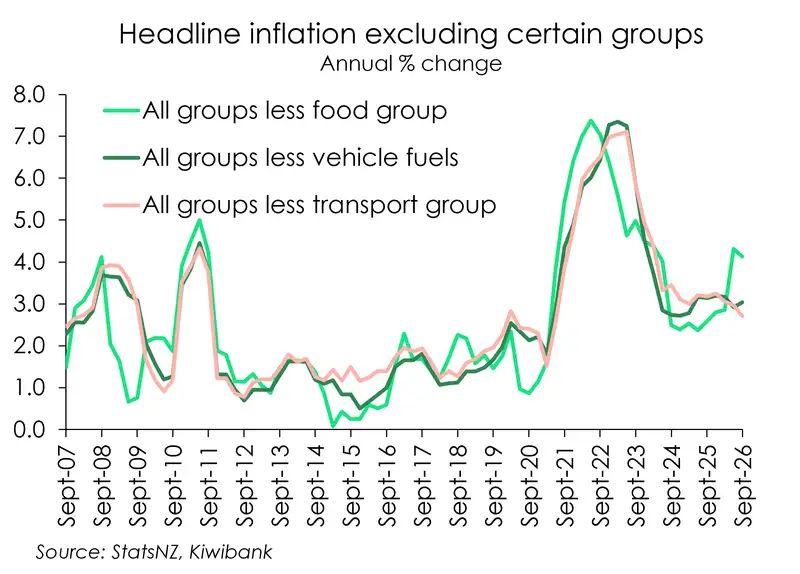
- New Zealand's prices increased by 3.7% annually in the September quarter, lower than our forecast of 4.0%. Offshore and industries most impacted by the oil shock drive the numbers. When we remove transport costs, headline price growth is just 2.7%.
- Inflation from offshore was up the most, increasing by 4.3% annually and 0.2% quarterly, compared to domestic prices up 3.3% annually and 1.0% quarterly.
- Air travel prices took off, contributing over a third of the headline rate move. When you consider the industry’s biggest cost (jet fuel), it’s not hard to see why.
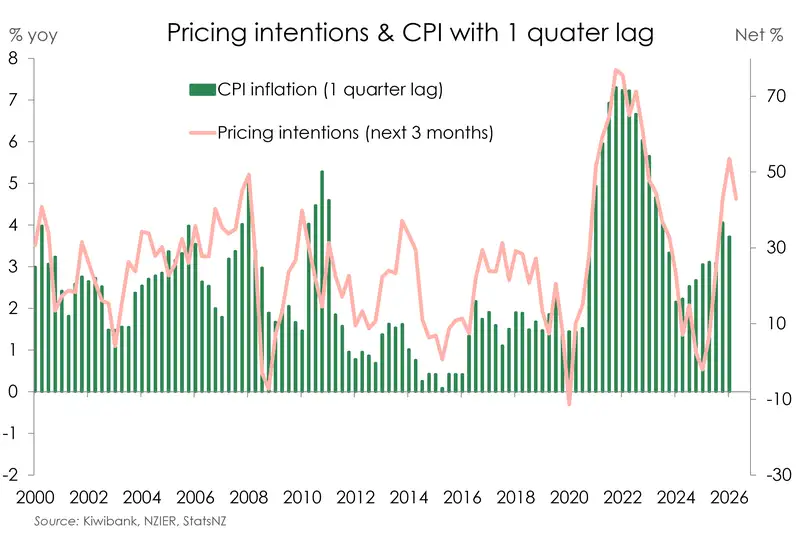
We expected inflation to remain relatively elevated in the September quarter. And it did. Headline inflation was 3.7% annually, and 0.7% quarterly. At first glance, this is good news. Inflation is coming down from the June quarter when it was 4.1%.
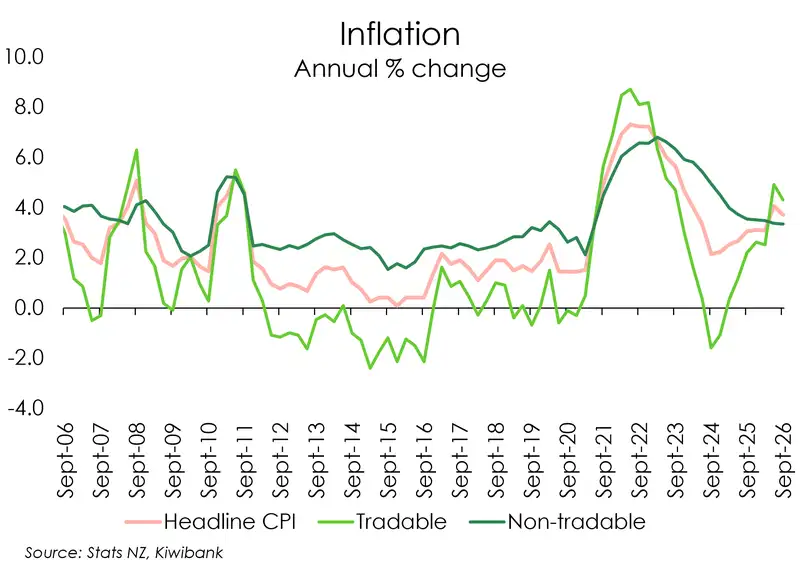
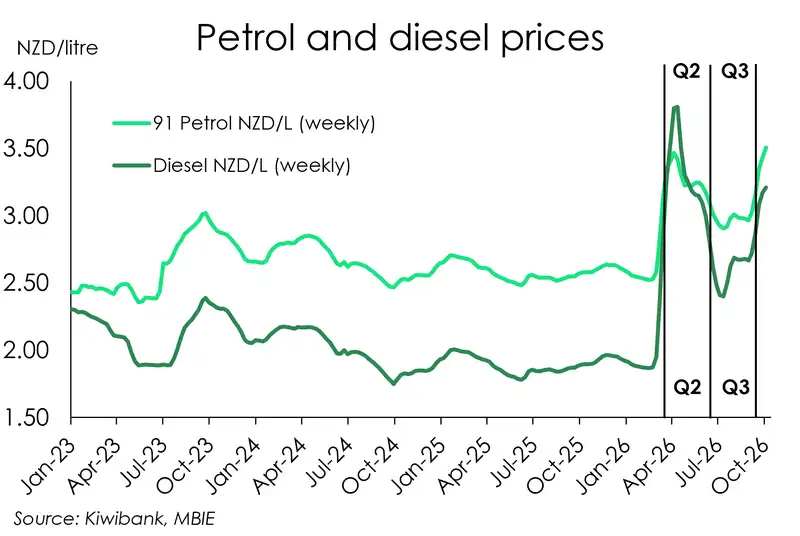
But more importantly, core inflation is not higher. It remains at 2.9%. We’re happy to see that. Most of the price growth measured in the headline is coming from offshore still. Those pesky oil-derived products remained elevated in the September quarter. Petrol is up 19% on September 2025, albeit not quite as bad as June.
The component of price increases that were imported (tradable inflation) was up 4.3%. Domestic prices (non-tradable inflation) were up 3.3%, the lowest since June 2021. Both are down from the June quarter, tradable inflation by 0.6 percentage points, non-tradable by 0.1 percentage points.
If we remove vehicle fuels from the equation, inflation sits at 3.2% year on year. When you also exclude household energy price increases, inflation would sit at 3.0%.
Kiwi dollar weakness added to the costs of imports in the September quarter. This was felt in the construction industry. The cost of building a new home went up by 3.2% on the year, as a result of increases in price in construction components, fittings, labour costs and fuels. Anyone looking to change their carpets should have done so at the start of the year! From a retail price perspective, the cost of a new carpet went up by 8.7% compared to the June quarter.
The cost of international air travel was up 14.3%, explaining more than a third of the quarterly move in headline prices. Unsurprising given the figures we saw in the select price indices earlier this month. Jet fuel is the biggest cost input for the airline industry, so we expect the costs of travel to move quickly. When we exclude transport costs from the inflation numbers, we have a headline inflation rate of 2.7% year on year and 0.8% change from the June quarter.
Local authority rates and payments contributed almost a third to the quarterly move in prices, going up by 6.2%. Electricity prices continued to rise in the September quarter, taking the annual price increase to 9.3%. This only serves to squeeze Kiwi households further. Rates and electricity are non-negotiable bills for households. Add to that still elevated petrol costs and you have a Kiwi consumer up against the proverbial wall.
That being said, local authority rates always increase in the third quarter of the year. That’s why there is always a seasonal spike at the quarterly level for non-tradable inflation. So the fact that it still fell at an annual level is a good new story.
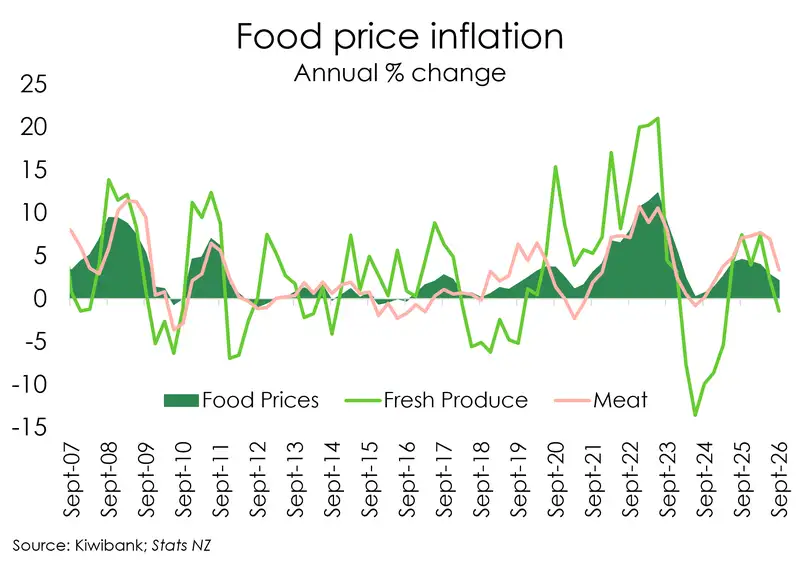
Vegetables were also up in price for the quarter, by 10.5%, but down compared to the September quarter of 2025. So more expensive than in June, but cheaper than last year.
Milk cheese and eggs were down in price, as a group, by 14.7%. That indicates that our domestic chickens are surviving bird flu fears. It’s good news as the price of other sources of protein, such as beef and lamb continue to grind higher internationally.
While quarterly movements were mixed, annual food price inflation continues to ease.
The December quarter is shaping up to be bad. With record high shipping costs for oil into Asia, we will continue to feel the pinch at the pump here in Aotearoa. The question remains of whether domestic businesses will start to raise prices as a result. If the last two quarters tells us anything about that, it’s that they can’t even if they want to. Consumers are spending more on petrol and have less to spend on everything else.
Any business looking to raise prices will be faced by Kiwi households turning their backs and walking away. Other than necessities, Kiwi can’t afford to pay higher prices for much else right now, their budgets are constrained. So businesses that can absorb the costs and carry on with reduced margins will survive. The rest will struggle.
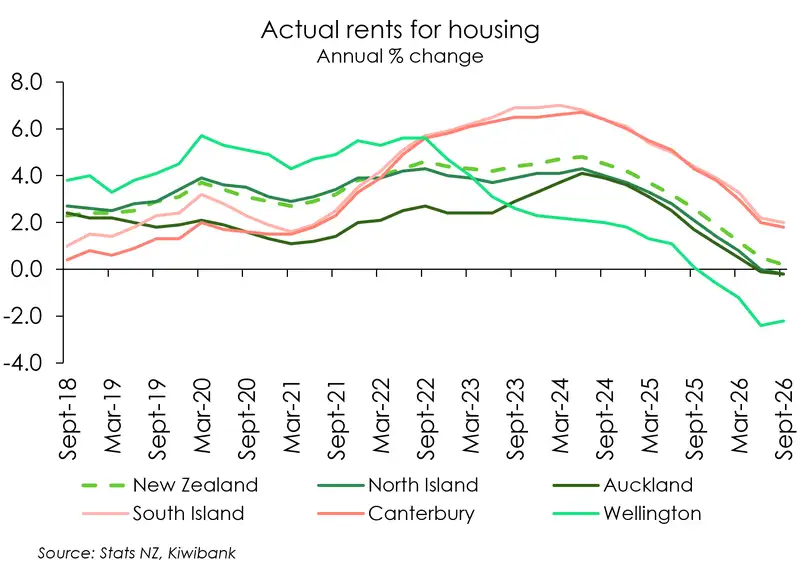
Rents continue to act as a disinflationary force in the economy, with rents in Auckland and Wellington falling for three and five quarters respectively.
We don’t need rate hikes at the minute. Of course, the market expects the Reserve Bank to hike interest rates again in October (or December as they indicated in their September monetary policy statement). We say get it over and done with if they’re going to do it. Take the interest rate to 3% and hold there so we can have some stability. We don’t think a hike is needed at all, to be clear. But if the fear is that domestic prices will rise as a result of the oil shock (which they haven’t), then rip the band-aid off and let us get on with trying to recover as an economy.
All content is general commentary, research and information only and isn’t financial or investment advice. This information doesn’t take into account your objectives, financial situation or needs, and its contents shouldn’t be relied on or used as a basis for entering into any products described in it. The views expressed are those of the authors and are based on information reasonably believed but not warranted to be or remain correct. Any views or information, while given in good faith, aren’t necessarily the views of Kiwibank Limited and are given with an express disclaimer of responsibility. Except where contrary to law, Kiwibank and its related entities aren’t liable for the information and no right of action shall arise or can be taken against any of the authors, Kiwibank Limited or its employees either directly or indirectly as a result of any views expressed from this information.