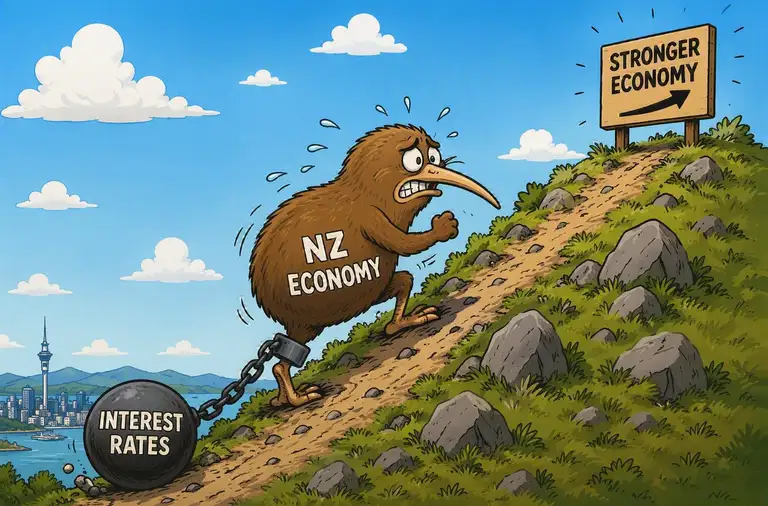

- The June quarter inflation numbers printed high at 4.1%. That’s to be expected, we were forecasting 4.2%. But we were hoping for a lower print. The oil shock eased a little in June, but not enough.
- The biggest contributors to the spike in prices were petrol and diesel. Petrol price increases explained almost a quarter of the annual rate. Headline inflation would have been 2.9% had petrol and diesel prices not changed. That would have been within the Reserve Bank’s target band.
- All in all, core measures of inflation were leaning positive. Household energy prices continue to stretch Kiwi energy bills, whereas food price pressures eased.
- What’s more important for monetary policy is where inflation is likely to land in 2027 and beyond. And we’re expecting a swift move back to 2% next year. Because there is lots of spare capacity out there. Rental inflation, for example, is really weak, with a soft housing market.
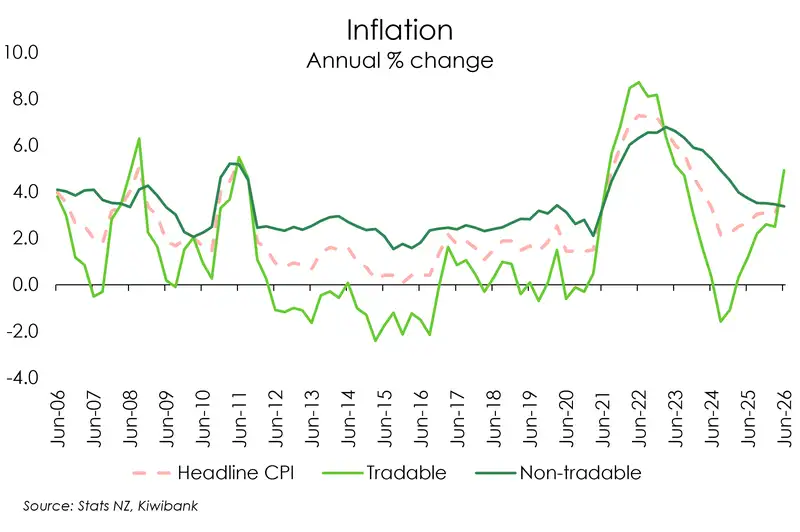
Headline inflation printed at 4.1% for June, a touch higher than consensus of 4.0%. But it’s not raising too many eyebrows. We were forecasting 4.2%, and we are happy to see it come in a little lower. On a quarterly basis, prices were 1.5% higher than the March quarter.
The headline rate is deceiving, as a large proportion was driven by price increases offshore. The cost of petrol and diesel were responsible for over 30% of the annual rise in inflation. Headline inflation would have been 2.9% had petrol and diesel prices not changed, which is lower than the March read of 3.1% and narrowly within the Reserve Bank's target band.
When excluding the effect of petrol and diesel prices, inflation only went up only 0.5% on a quarterly basis.
The headline number is high. In fact, it is the highest since December 2023. But we aren't surprised. And we don't expect the Reserve Bank to be surprised either. Whether it's filling up the car, or the wince before turning on the heater at night, Kiwi households and businesses are feeling the pain. And today’s data simply validates that.
The price of petrol was up 20% over the June quarter. Diesel vehicles owners had it even worse, with the price of diesel rising 50%. That is a staggering increase.
Non-tradable (domestic) prices trended downward to 3.4%, a 0.1 percentage point move. Although it’s not a large move, it’s in the right direction. And this is despite large increases in local authority and electricity prices.
Tradeable (imported) inflation was higher than non-tradable inflation for the first time since December 2022, up 4.9% yoy. Tradable inflation was driven by global oil prices.
When excluding volatile food and fuel prices, tradable inflation increased 1.9% over the year to June, versus 1.8% in March.
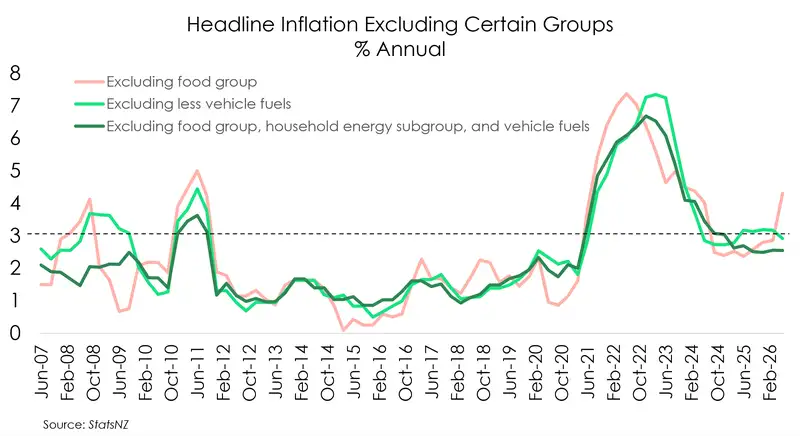
From our perspective, core measures of inflation are what matter. The numbers look less scary when volatile energy (especially fuel) prices are stripped out. This release should allow the Reserve Bank to breathe easy, even though their forecast of 3.9% was off by 0.2 percentage points.
Energy is the key culprit in this release. Between fuel and electricity, Kiwi households are feeling the pinch when it comes to powering their lives and their movement.
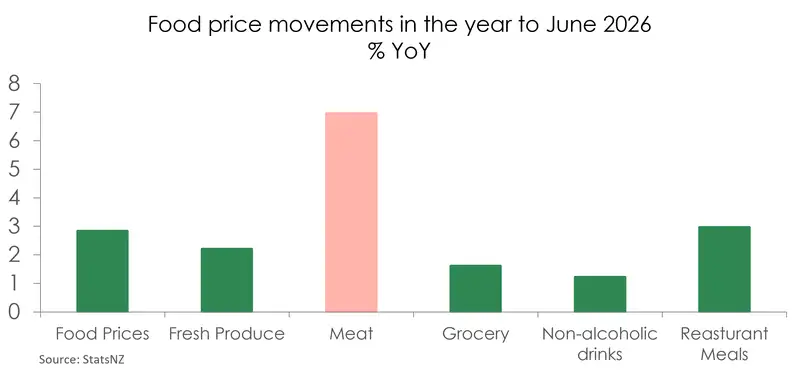
Supermarket shoppers weren’t given any reprieve this quarter either, with increases in food across the board. Although food prices aren’t heating up as quickly as before, one particularly painful movement came in the price of meat. This comes amidst a huge rise in demand for New Zealand meat exports. Meat exports to the US rose 60%, driving domestic prices for meat up 6.9% on a yearly basis.
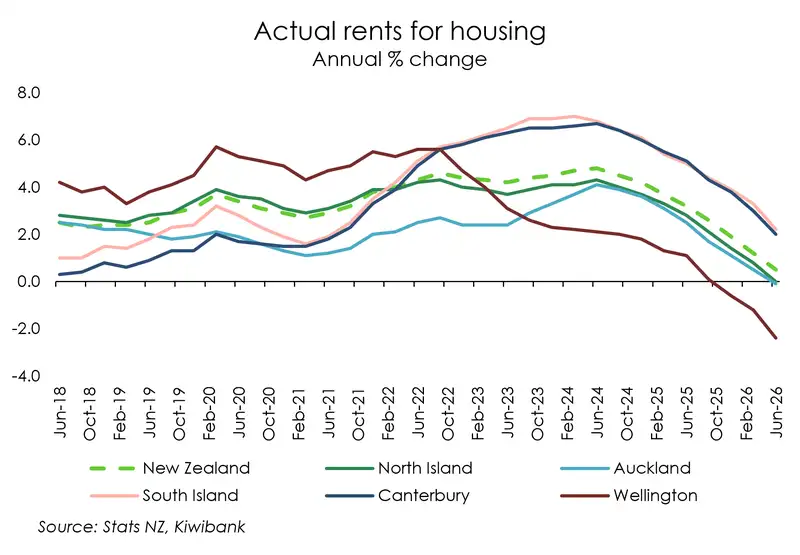
Housing continues to act as a disinflationary force. Rental price increases continued their decline across all regions of New Zealand. Renters in the North Island had it slightly better than those in the South Island. Some regions even saw a modest decrease in rent prices (some good news for Wellington renters there). Housing represents one of the largest shares of household spending, so soft rental prices will act as a handbrake on inflation.
Other noteworthy numbers include a persistently high rate of inflation for personal effects. This category includes items such as handbags, backpacks, sunglasses and suitcases.
Annual inflation for this category printed at a whopping 16.2%, down from 18.6% last quarter. Perhaps the astronomic rise in the price of suitcases is responsible for the slowdown in Kiwi flying across the ditch for a new life...
We are hopeful that the June quarter will mark the peak in annual inflation following the oil price shock. However, recent oil prices are heading up again. The RBNZ will therefore still be worried about the potential spillover effects of imported fuel prices into domestic prices. The June data gives us some hope that businesses have not been passing on cost pressures to consumers immediately.
The disinflationary forces, including a weak consumer, soft labour market and housing market help us paint a picture when we look to the future. We’re expecting inflation to make a swift move back to 2% by the middle of next year. And monetary policy should be looking over this same time period. Because there is lots of spare capacity out there.
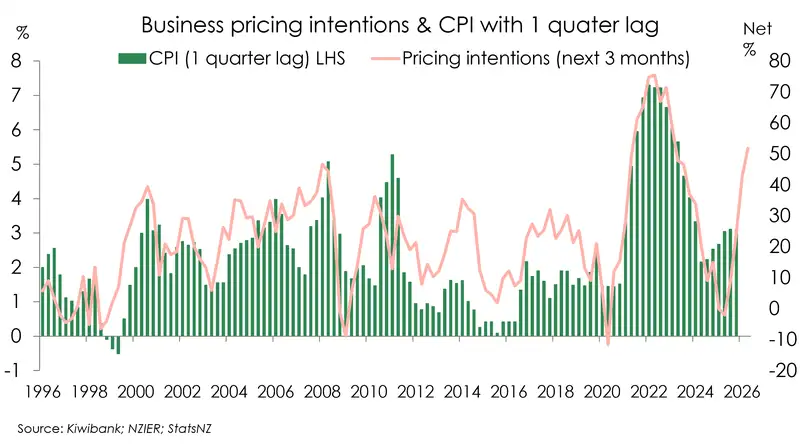
The risk is still there that businesses will try pass on those costs in the coming quarters. And the RBNZ is particularly sensitive to that. The Quarterly Survey of Business Opinion showed that roughly 43% (net) of businesses were planning on raising prices in the next 3 months. And we see that business pricing intentions for the next three months often map to inflation in the following quarter. The real cost of the oil crisis on inflation will come out in the third and fourth quarter data.
We know that will likely mean the RBNZ will continue on its path to hiking the official cash rate to a neutral rate. With two more rate hikes likely this year, we see that interest rate rising to 3% by the end of 2026.
All content is general commentary, research and information only and isn’t financial or investment advice. This information doesn’t take into account your objectives, financial situation or needs, and its contents shouldn’t be relied on or used as a basis for entering into any products described in it. The views expressed are those of the authors and are based on information reasonably believed but not warranted to be or remain correct. Any views or information, while given in good faith, aren’t necessarily the views of Kiwibank Limited and are given with an express disclaimer of responsibility. Except where contrary to law, Kiwibank and its related entities aren’t liable for the information and no right of action shall arise or can be taken against any of the authors, Kiwibank Limited or its employees either directly or indirectly as a result of any views expressed from this information.