Interest rates are up all over the world. US rates are the highest in 25 years. There is a strong relationship between global interest rates and longer dated Kiwi rates. And we have been taken along for the ride.
With this move higher, we’ve seen a very aggressive track for the RBNZ’s implied cash rate. There are too many hikes priced, and well above the RBNZ’s own track. But on the bright side, a weak Kiwi dollar is doing what we need.
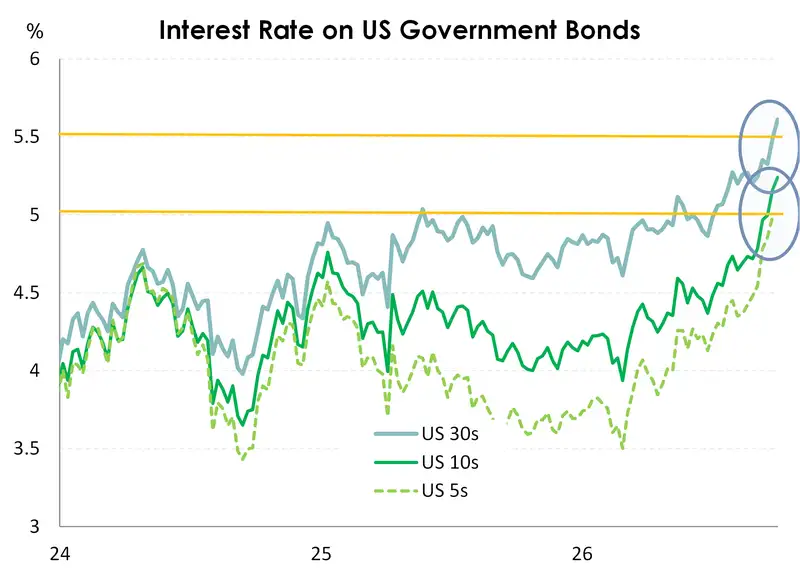
Interest rates have risen sharply around the world. Longer dated bond yields, 10 to 30 year Government debt, have lifted to levels not seen in a long time. US rates are the highest in 25 years. And it reflects some investor nerves and probably some diversion into AI investment (crowding out).
Inflation expectations have played a role, and have been pushed around by the War in the Middle East. Japanese yields have screamed higher, as the Japanese economy faces something they haven’t seen much of over the last 30 years, inflation. And that move has broadened into Europe, with borrowing costs across the Eurozone surging.
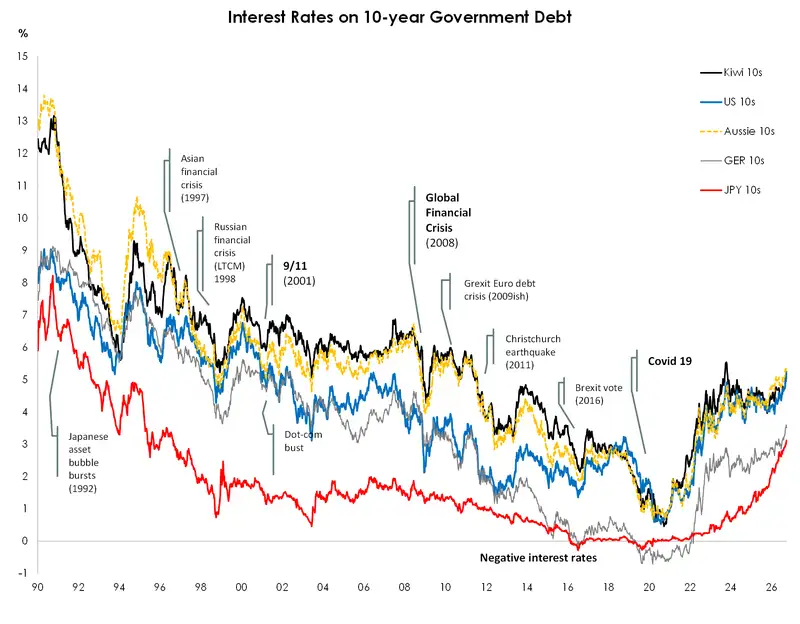
There are many drivers of interest rates, most are economic fundamentals, but it is the term premium that generates the most interest. In bond markets, there is always the fear of vigilantes dumping bonds altogether, driving interest rates higher… or simply demanding a much greater yield for the “risk” of default… too much Government debt. And debt heavy nations have been punished the most.
AND, AI investment may be playing a role. It’s difficult to quantify, but money headed for AI is money that may have previously been parked in Government bonds.
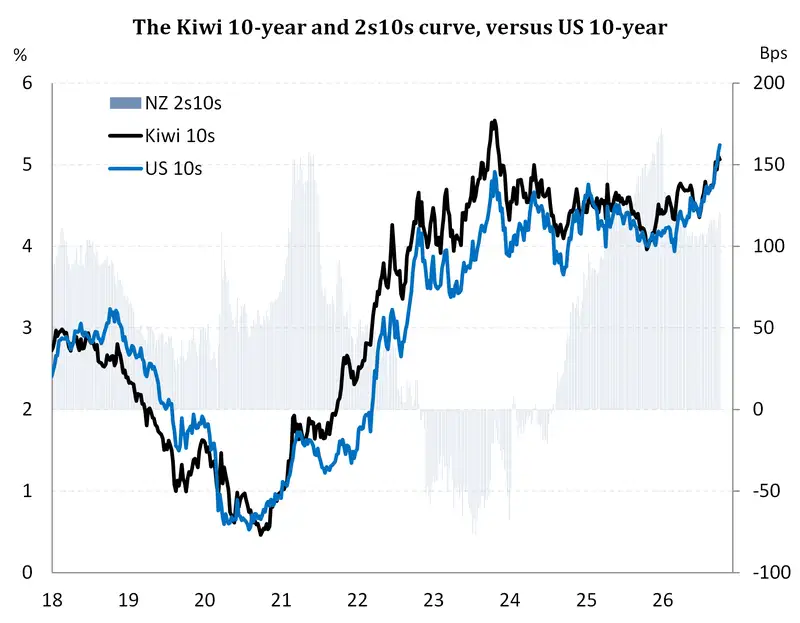
The relationship between global interest rates and longer dated Kiwi rates is strong. And when we see a push higher offshore, our rates rise with them… steepening the Kiwi curve. The difference between the 2-year bond rate and the 10-year bond rate has widened (steepened) from 100bps in May, to 120bps today. So the move in US and Global rates is lifting and twisting our curve.
Even though the entire Kiwi curve sits below the US, we have been moved by the US market. In the near term, the US Federal Reserve has set a higher cash rate, and is expected to hike by more. But Fed expectations have ‘fed’ into RBNZ expectations also.
With the move higher, we’ve seen a very aggressive track for the RBNZ’s cash rate, implied in Overnight Index Swap rates. We have a 3.1% cash rate implied by year end… so 10bps above what most analysts expect. But that’s not the real signal. The cash rate is priced to go above 4% next year, with 4.1% priced by Dec’27. Ouch. We obviously disagree, but “Markets can remain irrational longer than you can remain solvent.” - John Maynard Keynes.
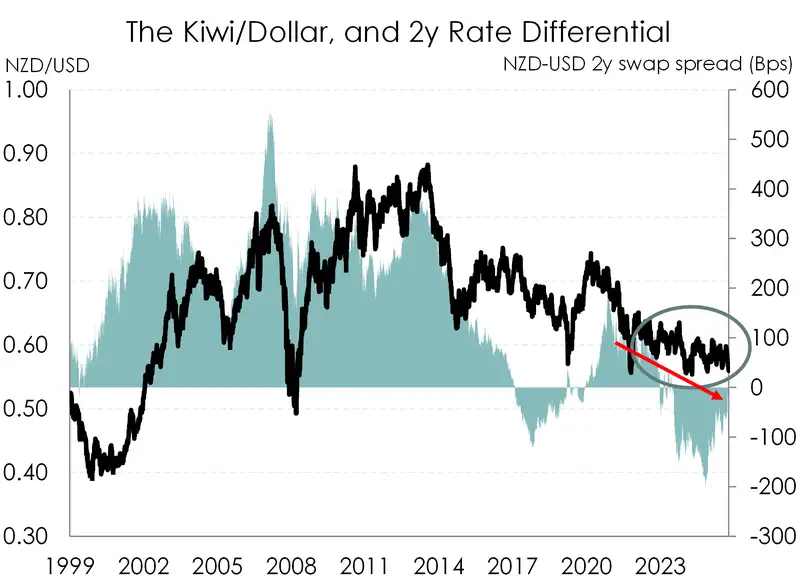
The ‘good’ news, our Kiwi currency is working in the right direction. Lower interest rate differentials, which are negative as Kiwi rates remain below US, have caused the Kiwi to fall below 56c. The fall in the Kiwi, is a ‘net’ benefit for our economy… because it makes us cheaper for foreign investment and purchases. It’s good for exports. Last week we were in Rotorua talking to many businesses, including tourism operators. They said tourist numbers have bounced to pre-Covid levels, although spending in total is still a little on the lighter side. They’re not complaining at all, it has been a very long road back. The currency weakness is certainly noticeable, and welcomed.
But note we said “net benefit”. Currency movements are a double edged sword. The weaker Kiwi is boosting our export earnings and at the same time reducing our purchasing power. The petrol and diesel price spike will be worse as a result. And imported inflation in general will be worse as a result. And yes, this complicates the RBNZ’s view, again.
All content is general commentary, research and information only and isn’t financial or investment advice. This information doesn’t take into account your objectives, financial situation or needs, and its contents shouldn’t be relied on or used as a basis for entering into any products described in it. The views expressed are those of the authors and are based on information reasonably believed but not warranted to be or remain correct. Any views or information, while given in good faith, aren’t necessarily the views of Kiwibank Limited and are given with an express disclaimer of responsibility. Except where contrary to law, Kiwibank and its related entities aren’t liable for the information and no right of action shall arise or can be taken against any of the authors, Kiwibank Limited or its employees either directly or indirectly as a result of any views expressed from this information.