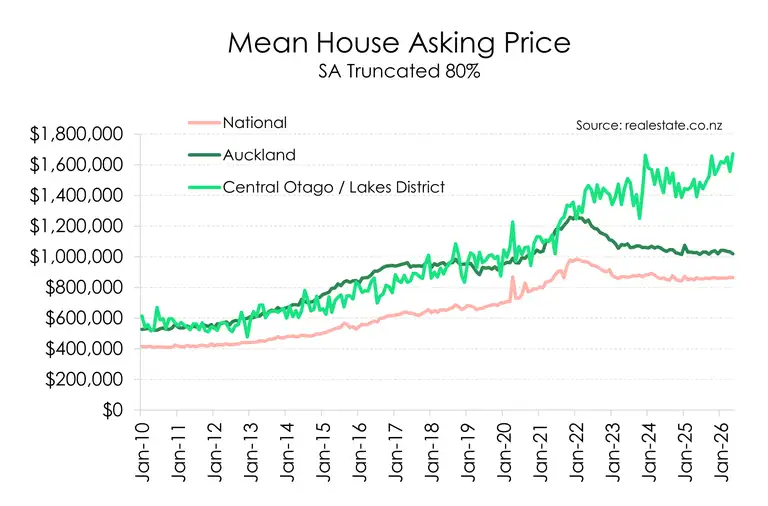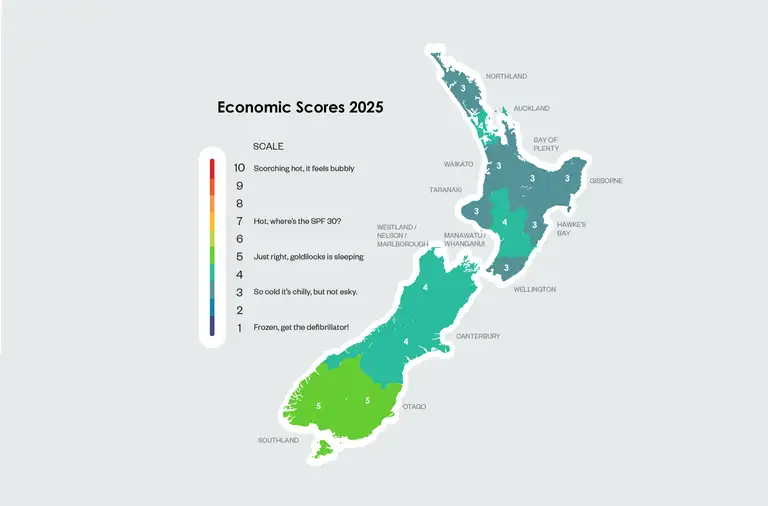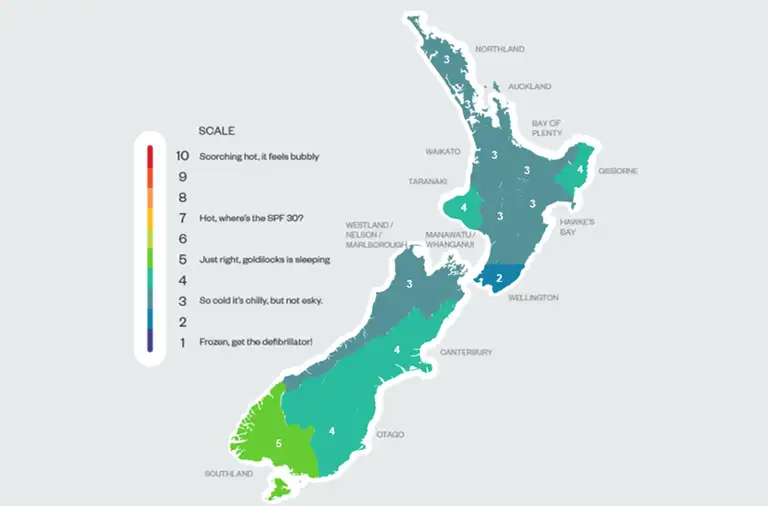
There was a quiet shift in spending patterns for Kiwi in the month of July. Most promising is the increase in spending on discretionary categories like hospitality, apparel and consumables.
The drop in spending on fuel deepened between June and July. In June, we saw households pull back from spending across most fronts, despite the drop in fuel costs. That was bad news for our economic recovery and indicated that households were re-building their safety nets before embarking on any shopping sprees.
As it turns out, spending has turned around quickly, with a rebound in discretionary spending in July. If it lasts, this could be the start of the cascade that kicks off an economic recovery. If it lasts…
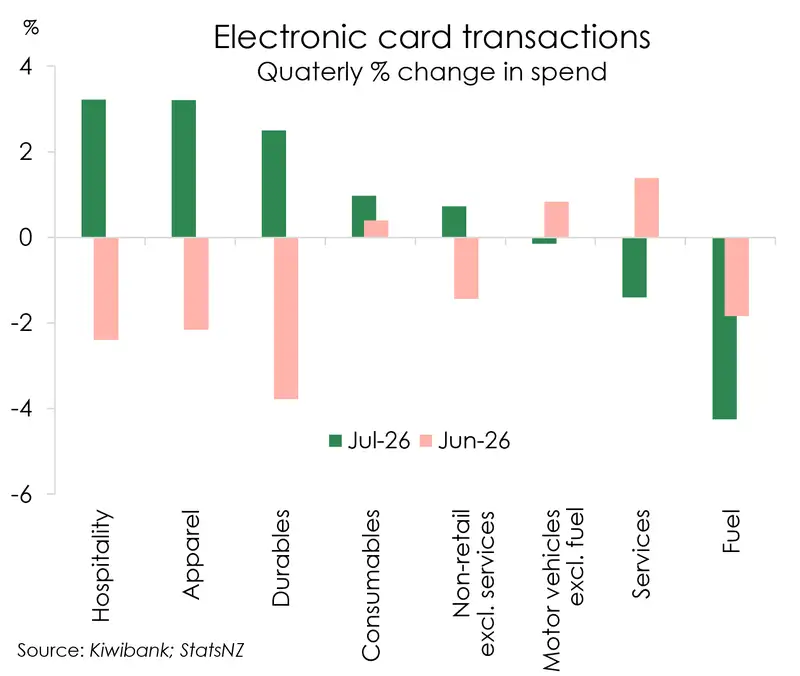
Card spending data is notoriously noisy and it captures household spending on a high frequency. But it is an indicator that can’t be ignored. The chart of the week highlights the stark difference in spending patterns between June and July of 2026. Although in both months Kiwi households spent less on fuel, in June they decided to hold off on spending their saved cash on anything else, pulling back on discretionary spending like hospitality and apparel. But when July came in with an ever bigger drop in fuel, the tap to discretionary spending turned back on.
Spending on the “fun” stuff, like going out to eat, new clothes and other optional activities are things households do when they feel good. When they feel confident about the future. When we read spending together with consumer confidence, we can build an even better picture. Indeed, the Roy Morgan Consumer Confidence index lifted 8 basis points between June and July. With confidence in July back above March levels.
Better yet, we saw a surge in the household’s perceptions of future conditions. All in all, Kiwi consumers are more confident that things will improve.
This bodes well for our economy. When households spend, businesses can breathe a little easier. As business confidence rises, we see higher investment rates in business expansions, increased hiring (and decreased firing). When Kiwi businesses start getting more into job creation, that tightens our labour market and gives employees more hope at negotiating a pay rise. And a bit of a positive cycle can set in from there. With confidence building for both consumers and businesses, more money moves around and the economy heats up.
We have a long way to go until things are likely to feel truly “hot” in our economy. At this point we are daydreaming of summer on a disproportionately warm winter’s day. We are heading in the right direction though and we want to keep looking at the glass half full.
All content is general commentary, research and information only and isn’t financial or investment advice. This information doesn’t take into account your objectives, financial situation or needs, and its contents shouldn’t be relied on or used as a basis for entering into any products described in it. The views expressed are those of the authors and are based on information reasonably believed but not warranted to be or remain correct. Any views or information, while given in good faith, aren’t necessarily the views of Kiwibank Limited and are given with an express disclaimer of responsibility. Except where contrary to law, Kiwibank and its related entities aren’t liable for the information and no right of action shall arise or can be taken against any of the authors, Kiwibank Limited or its employees either directly or indirectly as a result of any views expressed from this information.